


Magnetic Level Indicators (MLI): Vista Technology and Advantages over Glass Sight Glasses
Local level indication is an important measurement in many process control applications. It provides a reliable way to confirm level height, verify and calibrate level transmitters, manually control liquid level during control system failures and offer redundant level measurement technology.
What a magnetic level indicator is
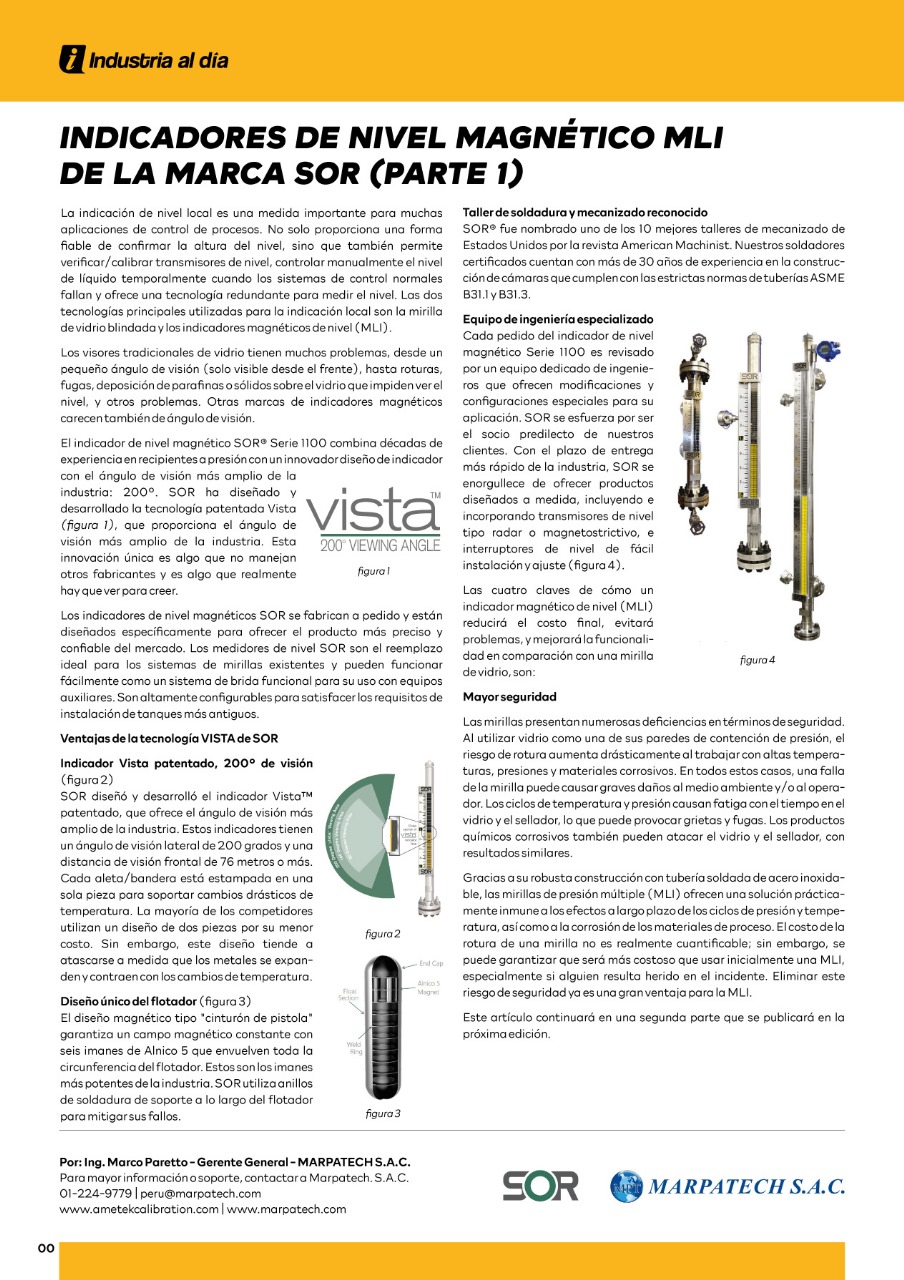
An MLI combines a pressure chamber, a float with permanent magnets and a visual indicator. The float moves with the level and magnetically drives the indicator flags, which change color. The result is a clear local reading with no contact between the fluid and the indicator.
The MLI can also include radar or magnetostrictive level transmitters and level switches that are easy to install and adjust, adding continuous signal and alarms without a second tank penetration.
The limits of glass sight glasses
Traditional glass sights have several problems: a narrow viewing angle (visible only from the front), leaks, paraffin or solids depositing on the glass and blocking the view, and breakage. Other magnetic indicator brands also lack a wide viewing angle.
Glass is also the pressure-containing element. With temperature, pressure and corrosive fluids, a sight failure can cause serious damage to the environment and operators. Temperature and pressure cycles fatigue the glass and sealant over time, and corrosive chemicals attack both.
Vista 200° technology
The SOR Series 1100 magnetic level indicator combines decades of pressure vessel experience with a wide-view indicator design. SOR developed the patented Vista technology, which provides a 200° viewing angle, the widest in the industry.
The indicators have a 200-degree side viewing angle and a front viewing distance of 76 meters or more. Each flag is stamped in one piece to withstand drastic temperature changes. Most competitors use a two-piece design because it is cheaper; however, that design tends to bind as metals expand and contract with temperature changes.
Float and magnets: the detail that defines reliability
The pistol-belt magnetic design ensures a constant magnetic field with six Alnico 5 magnets wrapping the entire float circumference. They are the strongest magnets in the industry. SOR uses support weld rings along the float to mitigate failures.
Indicators are made to order and designed specifically to deliver the most accurate and reliable product on the market. SOR level indicators are an ideal replacement for existing sight glass systems and can work as a functional flanged system with auxiliary equipment. They are highly configurable to meet old tank installation requirements.
Safety: the real cost of a breakage
Thanks to welded stainless steel construction, multiple-pressure MLIs offer a practical solution immune to the long-term effects of pressure and temperature cycles and process material corrosion.
The cost of a sight glass breakage cannot be fully quantified: it can be far more expensive than specifying an MLI from the start, especially if someone is injured. Eliminating that safety risk is a major MLI advantage.
Manufacturing and recognition
SOR was named one of the top 10 machine shops in the United States by American Machinist. Its certified welders have more than 30 years of experience building chambers that meet the strict ASME B31.1 and B31.3 piping standards.
Every Series 1100 magnetic level indicator order is reviewed by a dedicated engineering team that offers modifications and special configurations for the application. SOR strives to be the preferred partner of its customers and, with the fastest delivery time in the industry, offers custom-designed products, including integrated transmitters and switches.
When to replace a sight glass
- High pressure or temperature, or repeated thermal cycles.
- Corrosive fluids, steam or products that crystallize on the glass.
- Paraffins or solids blocking the reading.
- Old tanks where the existing flange should be reused.
- Cases where breakage threatens people, the environment or continuity of operations.
Next step
Marpatech represents SOR in Peru, Argentina and Colombia and integrates MLI indicators, transmitters and level switches with selection advice based on pressure, temperature, fluid and tank geometry.
Frequently asked questions
It is a local indicator made of a pressure chamber with a magnetic float and a flag indicator. The float transmits level magnetically, with no contact between the fluid and the indicator, and can include transmitters and switches.
Yes. SOR MLIs are an ideal replacement for existing sight glass systems and are configured to the tank flange and geometry. They are made to order to fit older installations.
It allows reading the level from the front and the sides, at distance and under variable lighting. Glass sight glasses and two-piece indicators usually restrict reading to a frontal position and bind under thermal cycles.
It depends on chamber configuration and material. Chambers are built from welded stainless steel pipe under ASME B31.1 and B31.3, and every order is reviewed for process pressure, temperature and fluid.
Because pressure containment is a welded metal chamber, not glass. The risk of glass breakage under temperature, pressure and corrosion is eliminated, along with the risk of leakage, environmental damage and injury.
Related brands and equipment
See each brand page for the country where you operate.