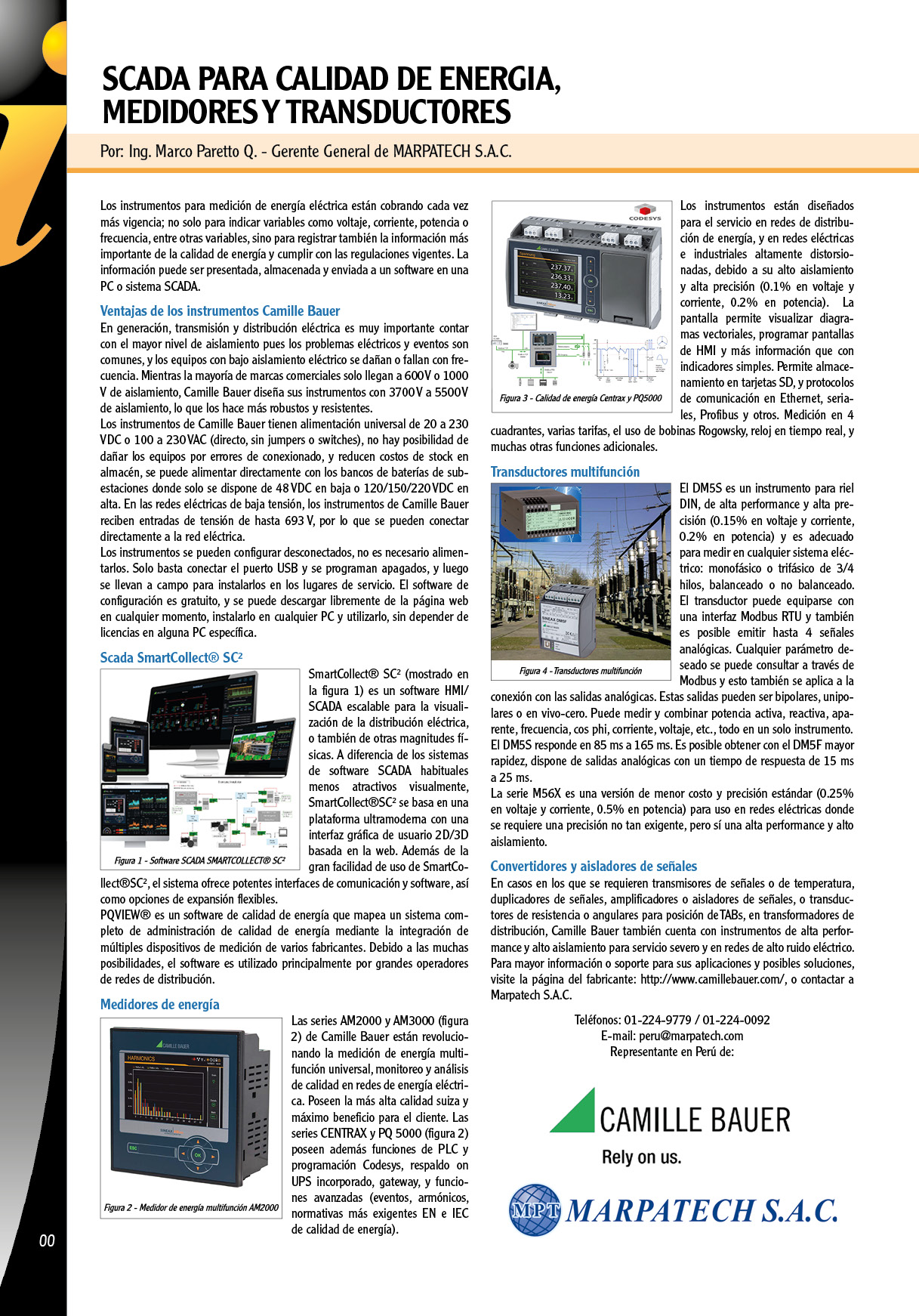


Continuous Emissions Monitoring (CEMS) and Particulate: How to Choose the Technology
A CEMS is not just an analyzer: it is a sampling, conditioning, measurement, logging and reporting system. The technical decision therefore starts with the stack and the applicable standard, not with the instrument.
What a CEMS requires and why it became mandatory
The National Protocol for Continuous Emissions Monitoring Systems for stationary sources defines the criteria for real-time measurement and the technical guidelines for environmental management based on emissions data.
The regulation began with the U.S. Clean Air Act in the early 1970s and was revised in the 1990s. From 2000 onward, continuous monitoring became mandatory in that country. European standards and the requirements of multinational companies —US-EPA Part 60, 63 and 75, among others— also apply to operations in Latin America.
What parameters a CEMS can measure
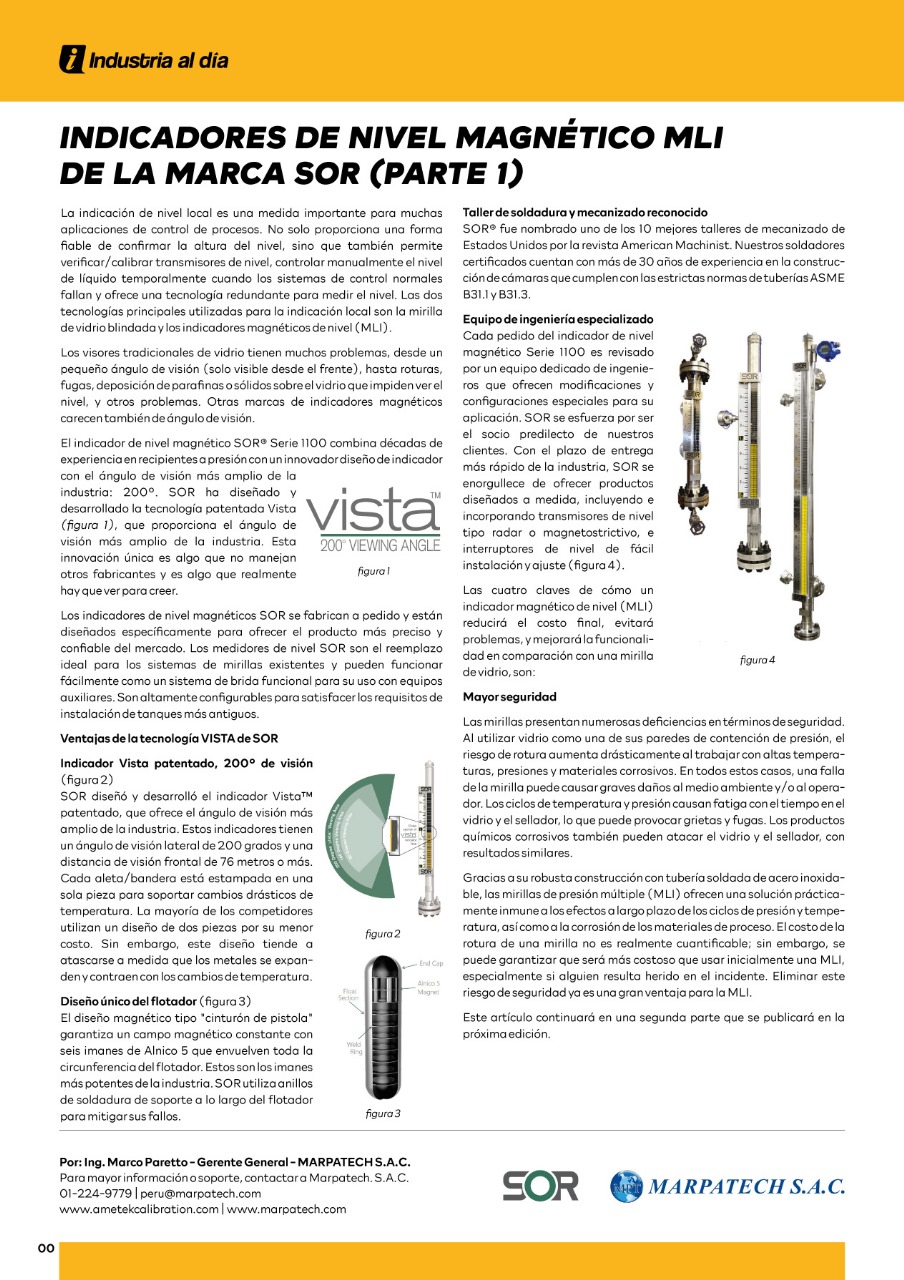
Parameters range from particulate matter and opacity to gases such as SO2, NOx, CO, CO2 and H2S. The architecture can be a single analyzer or a complete system with shelter, cabinet, flow and temperature measurement, heated lines and a stack sampling train.
AMETEK covers this range with non-dispersive ultraviolet (NDUV), laser (TDLAS), non-dispersive infrared (NDIR) and electrochemical analyzers, plus engineered systems. Selection depends on the species: CO and CO2 are typically measured by NDIR, while other species require laser or electrochemical technology.
Hot-wet or cold-dry: the decision that most affects maintenance
In hot-wet technologies the water is not removed and the sample stays above the dew point, so the gas does not condense. This prevents condensate from altering the sample composition or carrying species that form acids and corrode analyzers and components.
Cold-dry technologies condition the sample by cooling it. This simplifies the analyzer, but condensate can change the composition and requires more frequent maintenance of the sampling train. It is common in less demanding processes, where the fuel is not heavy or the matrix is not complex.
Rule of thumb: if the sample has high moisture, soluble species or acid formation risk, cold-dry maintenance costs grow quickly and hot-wet is usually the lower life-cycle cost.
Electrochemical cells and ADST technology
Electrochemical cells are designed for short exposure or non-demanding continuous monitors, because they saturate, drift easily and need frequent maintenance. They remain the right technology for some matrices, but maintenance must be designed in from the start.
For those processes, AMETEK Land offers analyzers with ADST (Automated Dual Sensor Technology), which alternates two sensors in parallel. The result is ultra-low drift, higher measurement reliability, longer cell life and fewer maintenance interventions.
Opacity or particulate mass
The U.S. EPA traditionally set emission limits as opacity percentage; European regulations use mass concentration. The choice between opacity and particulate matter measurement therefore depends on the local standard and the compliance evidence the plant must provide.
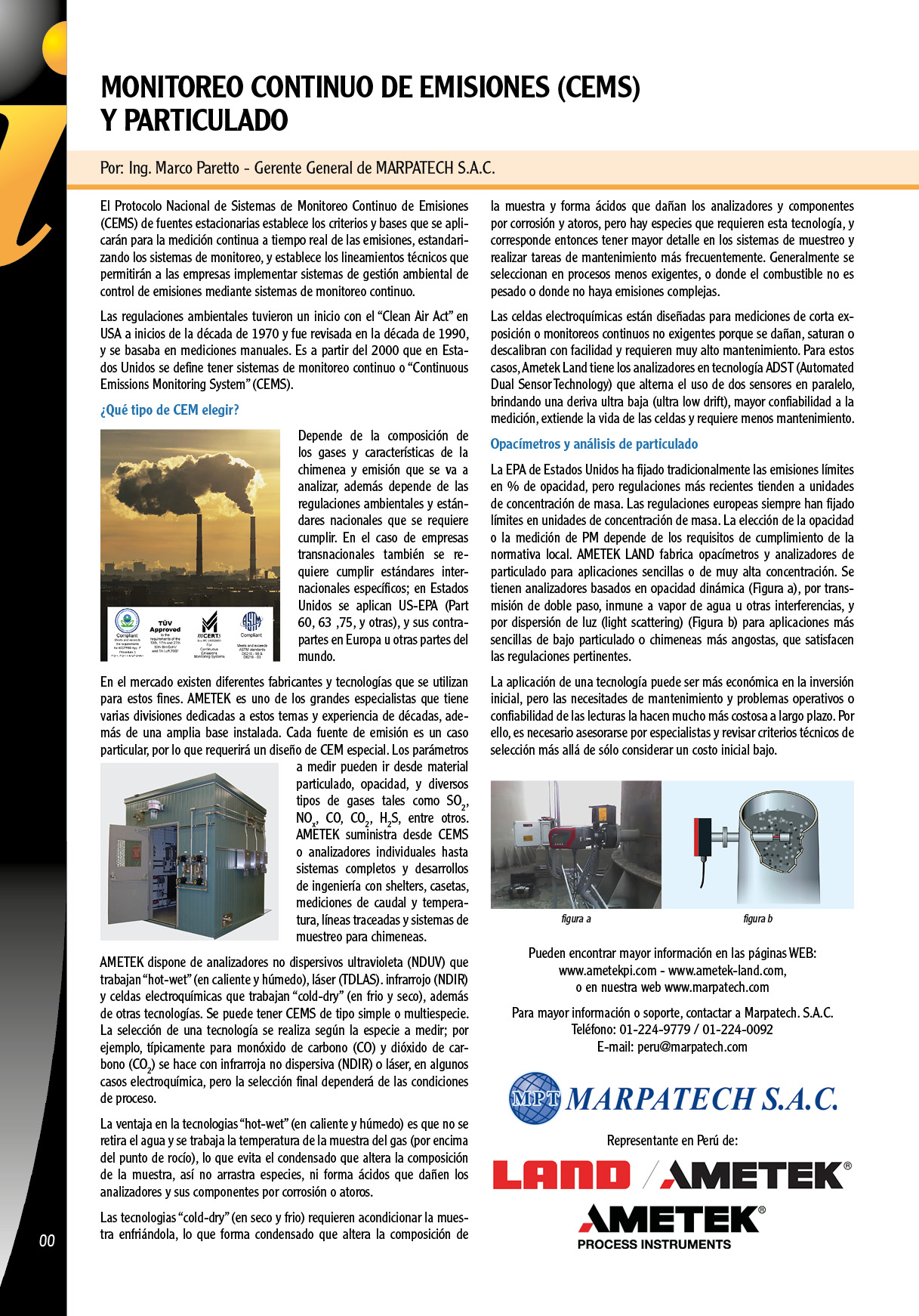
For simple or very high concentration applications, dynamic opacity monitors (double pass) are immune to water vapor and other interferences. For low particulate or narrower stacks, light scattering is used.
Initial cost versus operating cost
A technology can be cheaper to buy and far more expensive to operate: consumables, calibration gases, spare parts, data availability and engineering hours. In a system that must report continuously, availability and drift matter more than list price.
Review the technical criteria with specialists before deciding: gas composition and temperature, moisture content, measurement range, reference standard, calibration frequency and maintenance plan.
How the decision changes in Peru, Colombia and Argentina
In Peru, environmental enforcement is led by OEFA and emissions are reported under the limits and protocols applicable to each sector. In Colombia the national authority is ANLA, with regional autonomous corporations within their jurisdiction. In Argentina, jurisdiction is provincial and corresponds to the City of Buenos Aires, with requirements that vary by province.
In all three markets, multinational operations often add corporate standards aligned with US-EPA or European rules. The CEMS design must state from the outset which standard it will meet and how the data will be demonstrated.
Next step
If the plant must install, upgrade or audit a CEMS, start with a joint review of the stack, the process and the applicable standard. Marpatech integrates analyzers, opacity monitors and complete systems in Peru, Argentina and Colombia, with local technical support and spare parts.
Frequently asked questions
It depends on the activity, the source size and the applicable sector standard. In general terms, it is required when the environmental authority or the reference standard mandates continuous emissions monitoring for that source. Review the environmental permit and the sector standard before defining the scope.
Hot-wet measures the sample hot and wet, above the dew point, avoiding condensation and loss of soluble species. Cold-dry cools and dries the sample before the analyzer. Hot-wet usually needs less maintenance in wet or corrosive samples; cold-dry simplifies the analyzer but requires frequent conditioning and cleaning.
The standard the plant must comply with defines it. The U.S. EPA historically set limits as opacity percentage; European standards use mass concentration. If the local standard requires mass, opacity is not a valid substitute.
Because they saturate and drift easily under permanent exposure and require frequent calibration and replacement. ADST technology alternates two sensors in parallel to reduce drift and extend cell life.
Both. Marpatech integrates individual analyzers and complete systems with shelter, cabinet, sampling train, flow and temperature measurement, and commissioning, with technical support in Peru, Argentina and Colombia.
Related brands and equipment
See each brand page for the country where you operate.